Let the Light In: A Reflection from the Road
By Beyond the Clock hosts, Ash Hanson & Anna Claussen
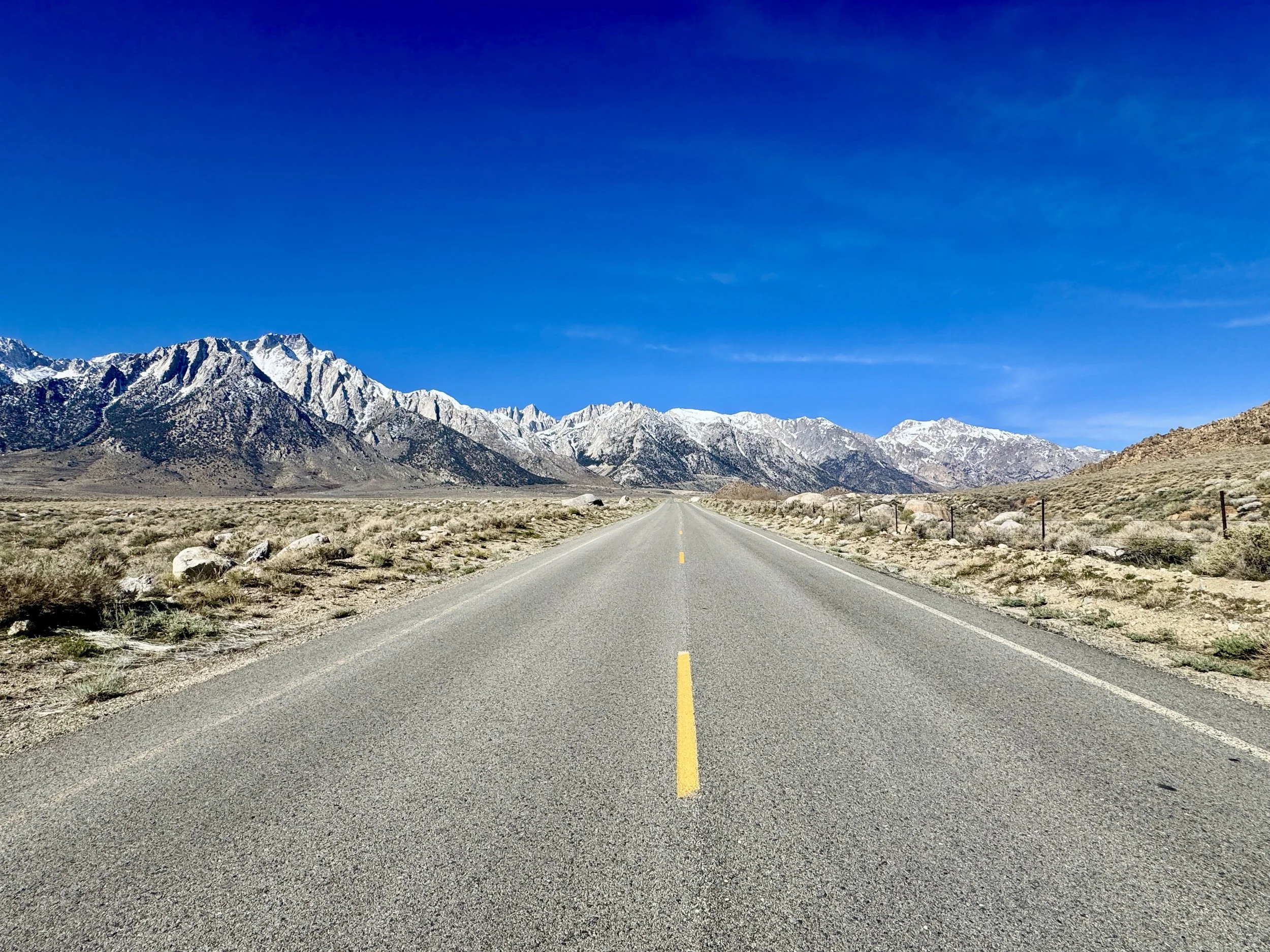
The road to rural is a little longer, but the journey itself is part of what you bring with you when you arrive.
Rural cultural research trips rarely unfold the way you expect them to.
They begin with a loose plan and a vague sense of purpose, followed by an email thread, a calendar invite, and a destination pinned on a map. But somewhere along the way, usually between long stretches of highway and unexpected conversations with strangers, the real purpose of the trip quietly reveals itself.
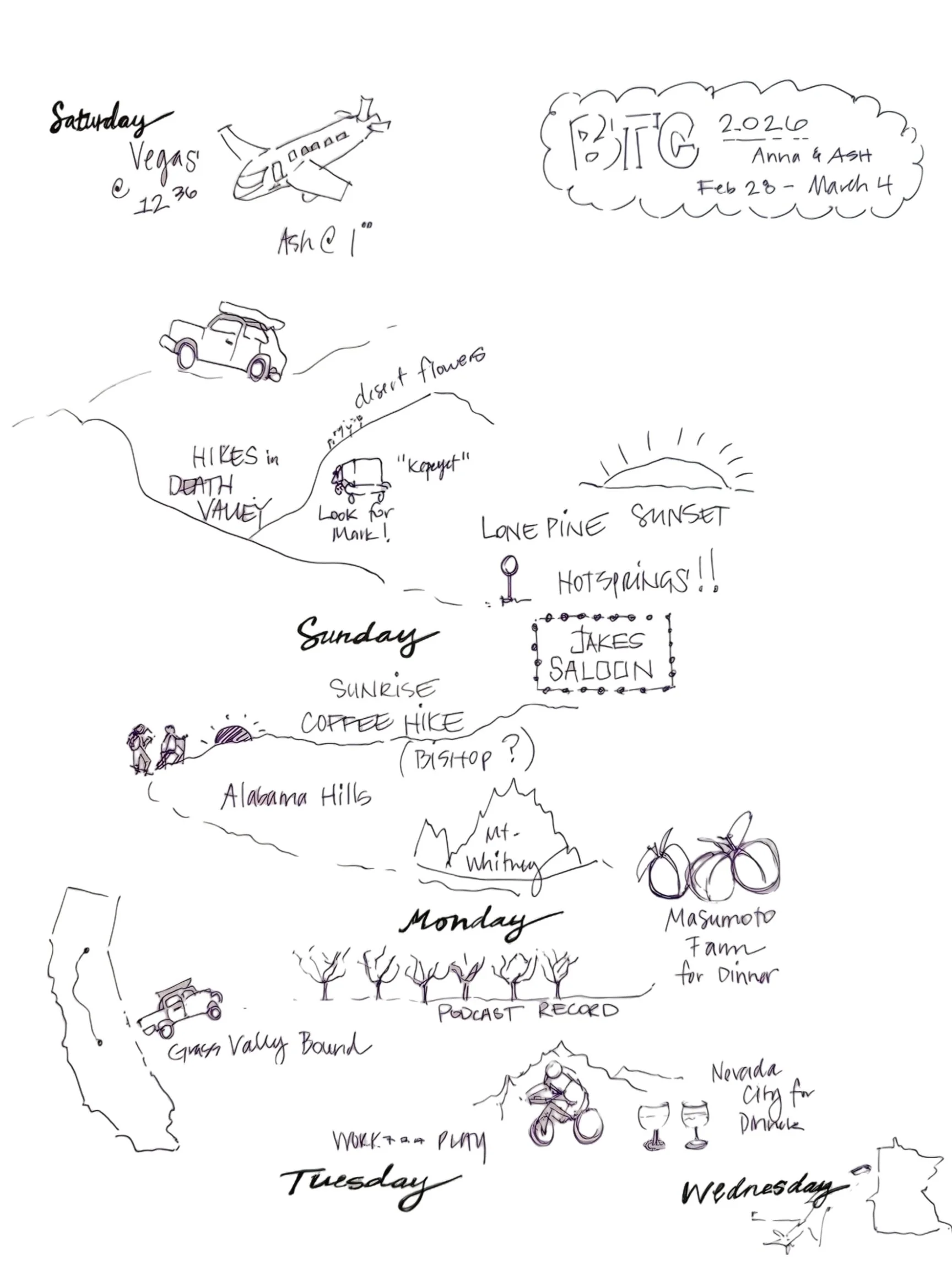
This one began in Las Vegas: Ash picked Anna up at the airport, and together we pointed the car west, crossing the immense desert basin of Death Valley as we made our way toward a string of small rural communities scattered across California: Lone Pine, Kernville, Fowler, Mariposa, and Grass Valley.
On paper, the goal was simple: record an in-person episode with Beyond the Clock resident artist and farmer Nikiko Masumoto. But in practice, it was about the journey itself.
As cultural workers, we often have to justify a lot of this work with measurements that don’t quite fit: How do we account for the hours we spend traveling to remote areas of the country to visit with artists and cultural workers in their communities? What is the evaluation metric for “feeling what it feels like to be somewhere”? What project budget line item do we name as the slow hours spent at a bar counter listening to stories about land, family, and livelihood of people and places?
And yet, as practitioners working within rural cultural ecosystems, this kind of time spent visiting and listening is absolutely essential. Traveling between rural communities reminds you that paying attention, being present, and showing up are, in and of themselves, vital work. These moments allow people to feel seen, reflect each other’s light, and bear witness to the joys, struggles, and possibilities of local life.
Sometimes, simply being there is enough.
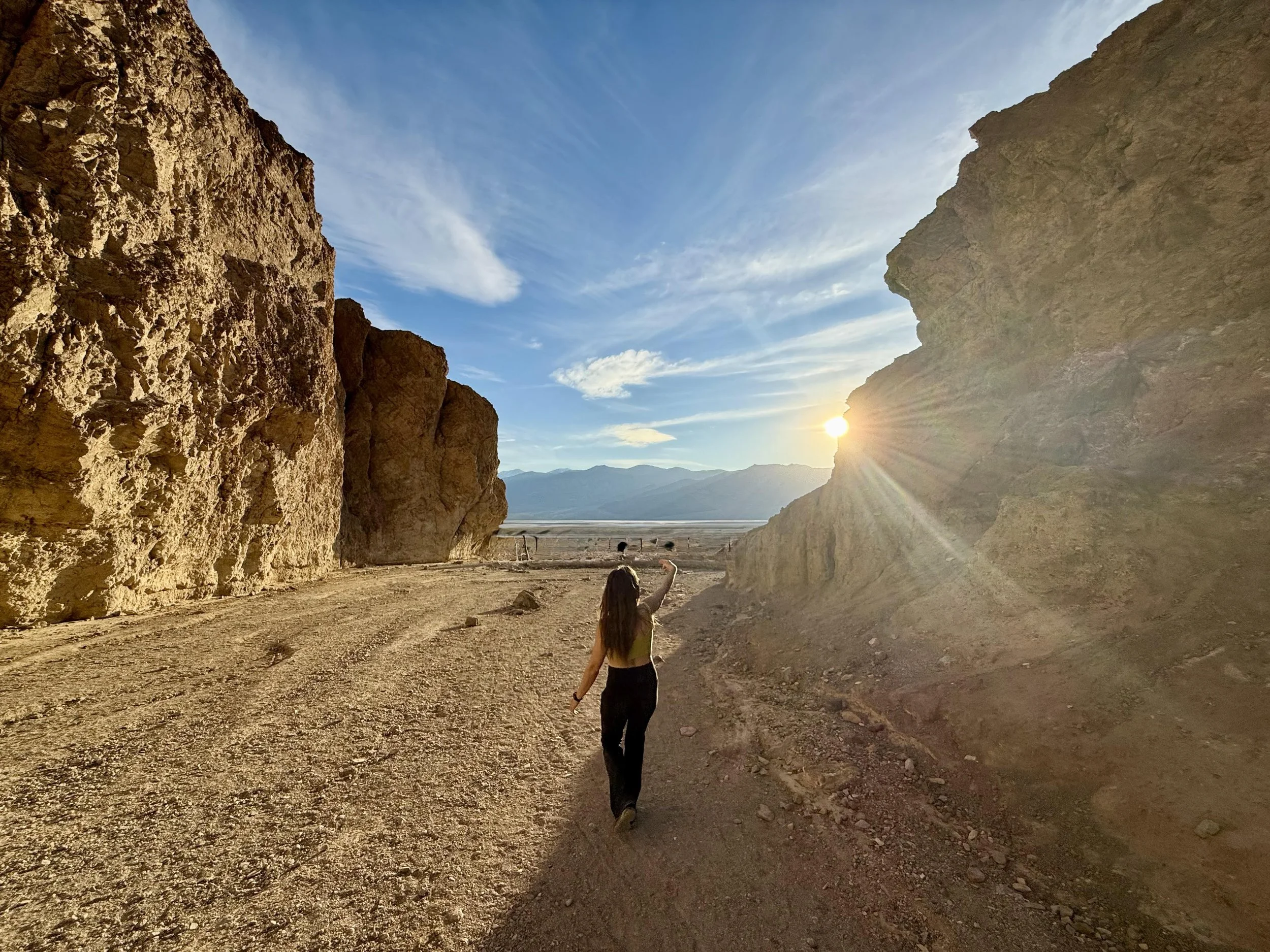
Traveling through rural places reminds you that attention is a practice.
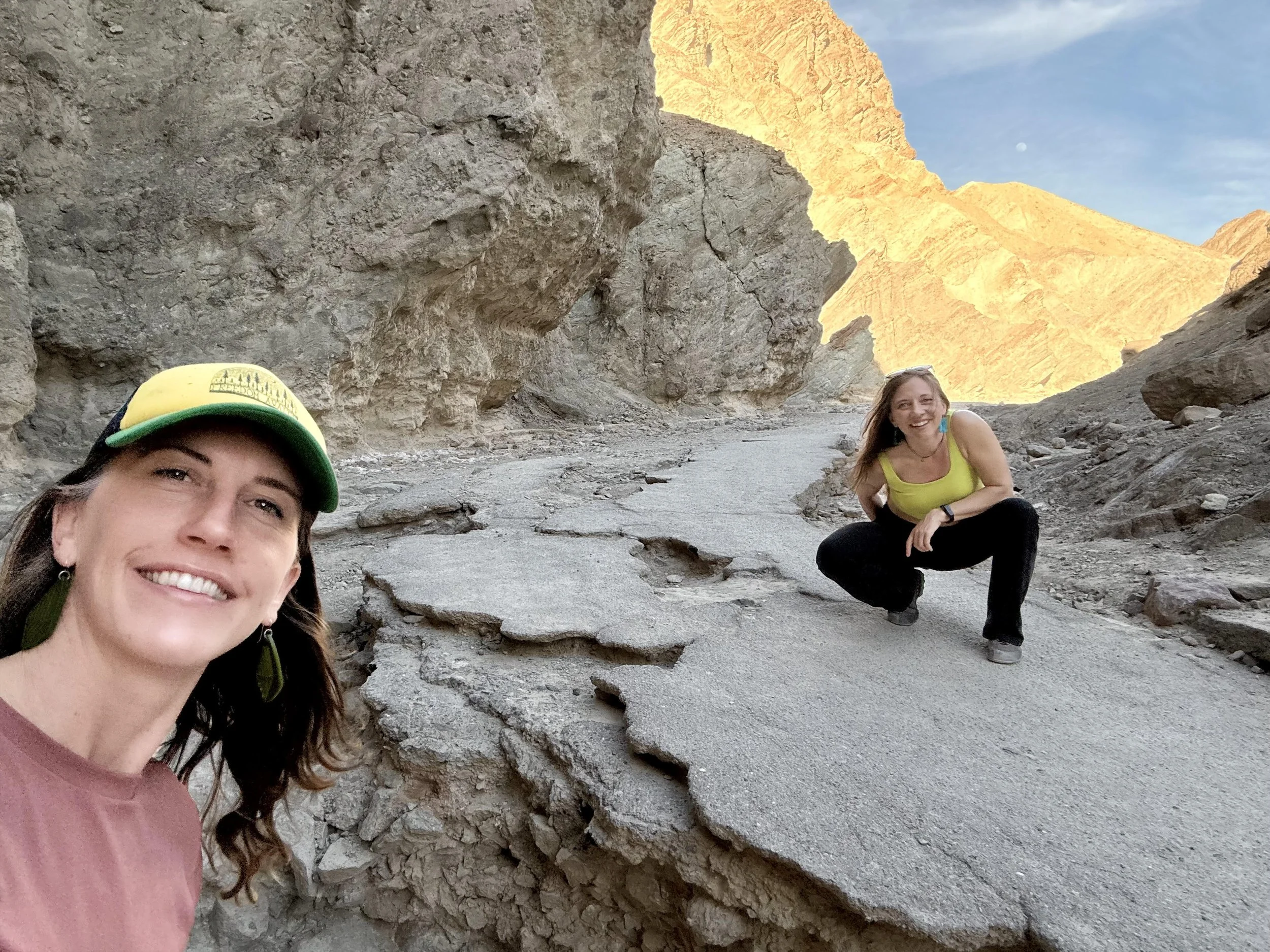
Deep Time
Crossing Death Valley is an experience that rearranges your sense of scale.
The landscape stretches outward in vast silence broken up by salt flats, sand dunes, mountains carved by wind, distances so expansive that your mind struggles to measure them.
You cannot simply read about a place like this. To understand it, you have to move through it. You have to step outside the car and feel the heat of the earth under your boots. You have to smell the air, feel the dryness in your lungs, watch the horizon shift in subtle ways as the road curves through the valley. Without those sensory experiences, a landscape remains abstract. With them, it becomes relational.
As we drove through the valley, our conversation drifted toward the concept of deep time; the ancestral recognition that landscapes carry stories that stretch far beyond our own lifetimes.
Traveling through rural places invites you into that kind of thinking.
The pace slows. Your phone loses signal. Your inbox stops tugging at your attention. And suddenly your curiosity expands. You pull over when something catches your eye. You listen to a bartender who recommends a detour that wasn’t on your itinerary. You dip your body into a snow-fed mountain river simply because it’s there. You open an audiobook about the history of Owens Valley after passing a dry lakebed and wondering what happened there. You follow the signs.
Sometimes quite literally.
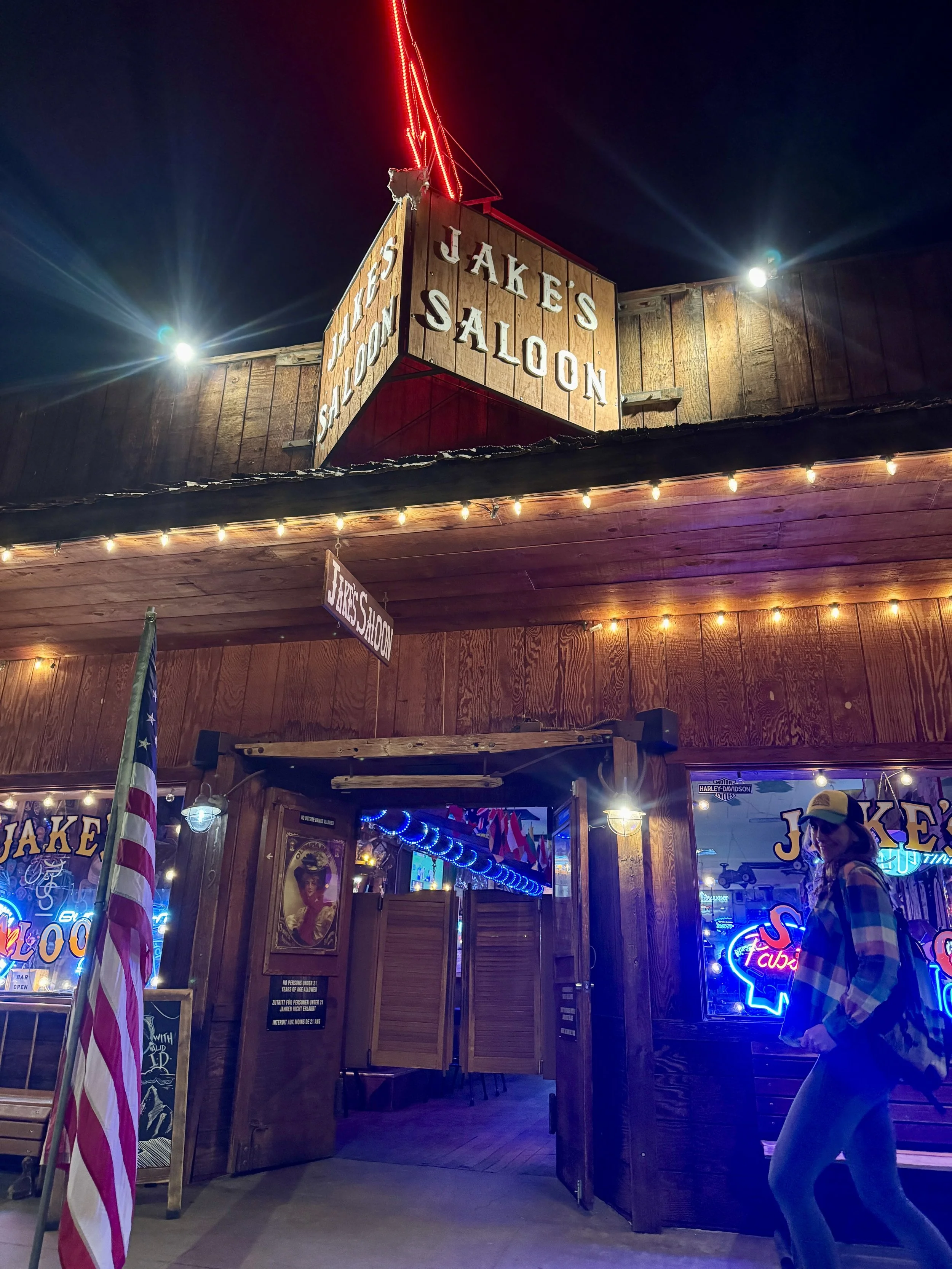
You follow the signs. You listen to the bartender. You pull over when curiosity asks you to.
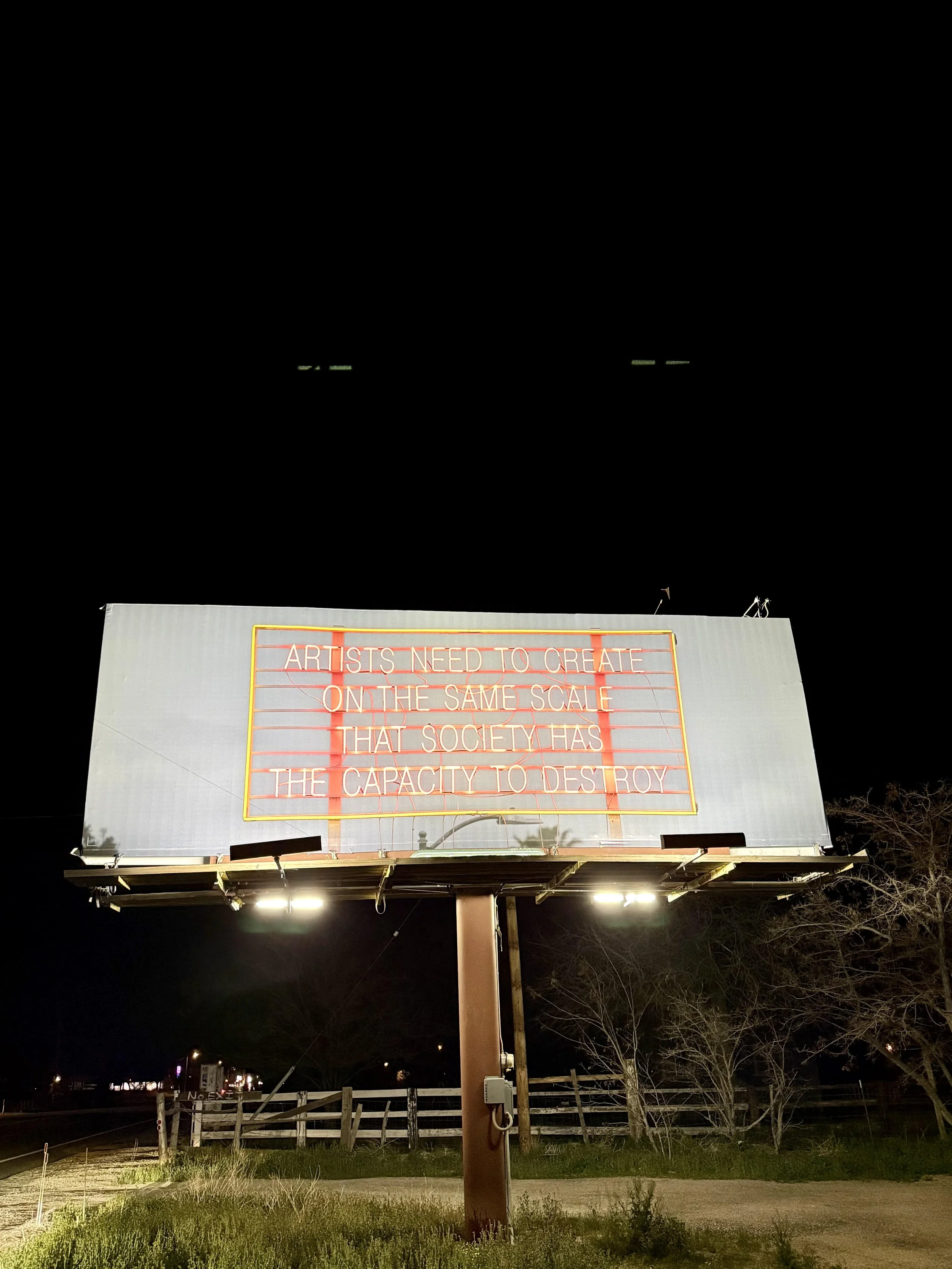
The Signs
Leaving Death Valley after dark, just outside the small town of Lone Pine, we saw a billboard glowing against the desert sky. It read:
“Artists need to create on the same scale that society has the capacity to destroy.”
No explanation. No advertisement. Just that single brightly lit sentence shining back at us in the darkness of night. It felt less like a billboard and more like a message; one that followed us all the way into Lone Pine, a town of roughly two thousand people nestled at the base of the Sierra Nevada.
That night we found ourselves at Jake’s Saloon. From the outside, it might appear to be just another roadside, dollar bill, dive bar. But anyone who has spent time working across rural communities knows places like this carry a particular kind of significance.
They are gathering places. Information exchanges. Informal story circles. Cultural research hubs.
If you’ve spent enough time visiting rural towns, you develop a kind of instinct for reading these spaces. You notice the rhythms of the room. Who belongs. Who is passing through. Whether the place feels like it holds history or is trying to outrun it. Each community is unique, of course. But, patterns repeat themselves across rural landscapes, and recognizing those patterns helps you ask better questions when you arrive somewhere new.
It doesn’t mean you already know the place. It simply means you are better positioned to know what questions to ask and that you are fully ready to listen.
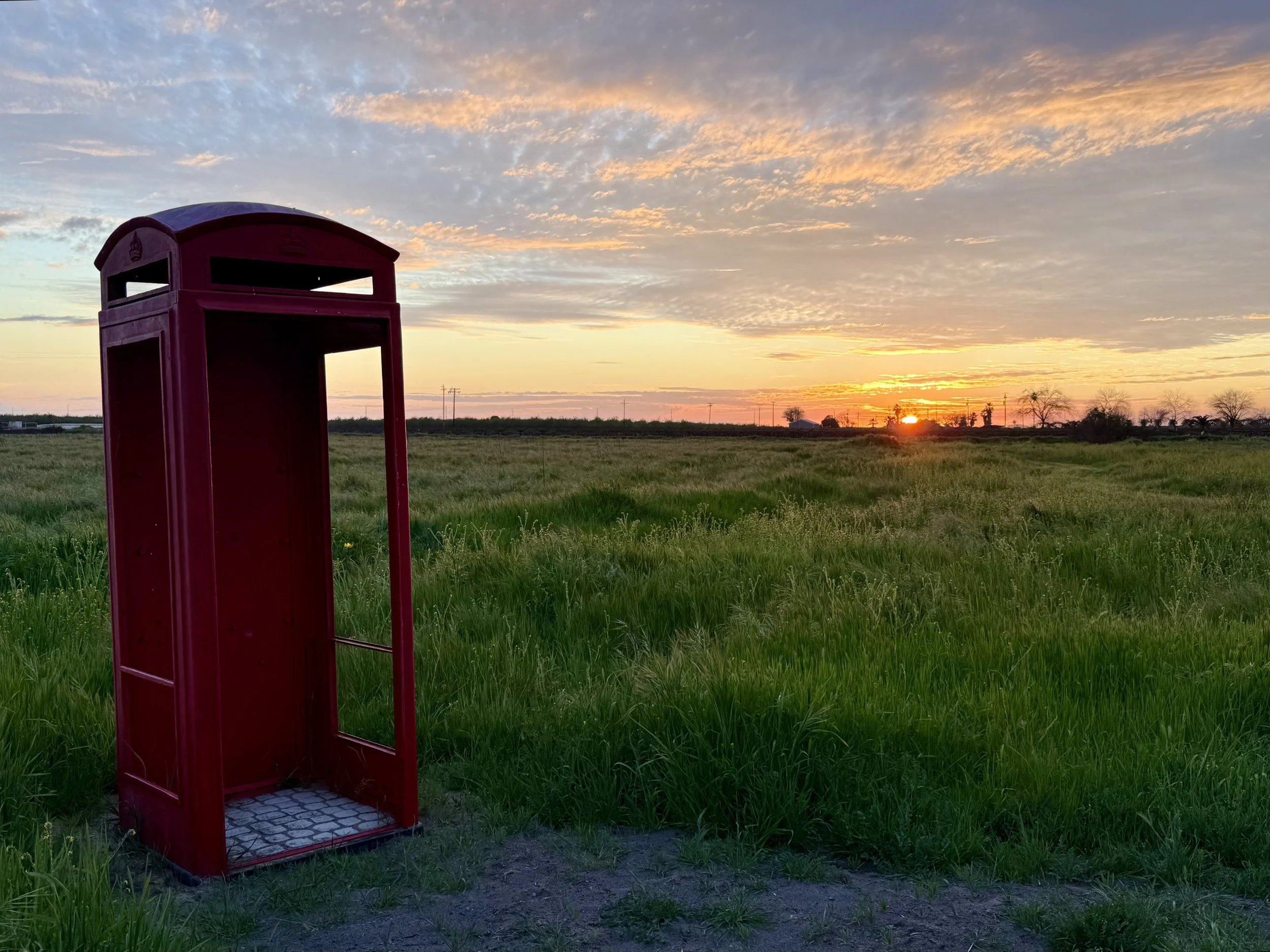
Memory does not only live in books. It lives in our bodies, our families, and our landscapes.
At the Farm
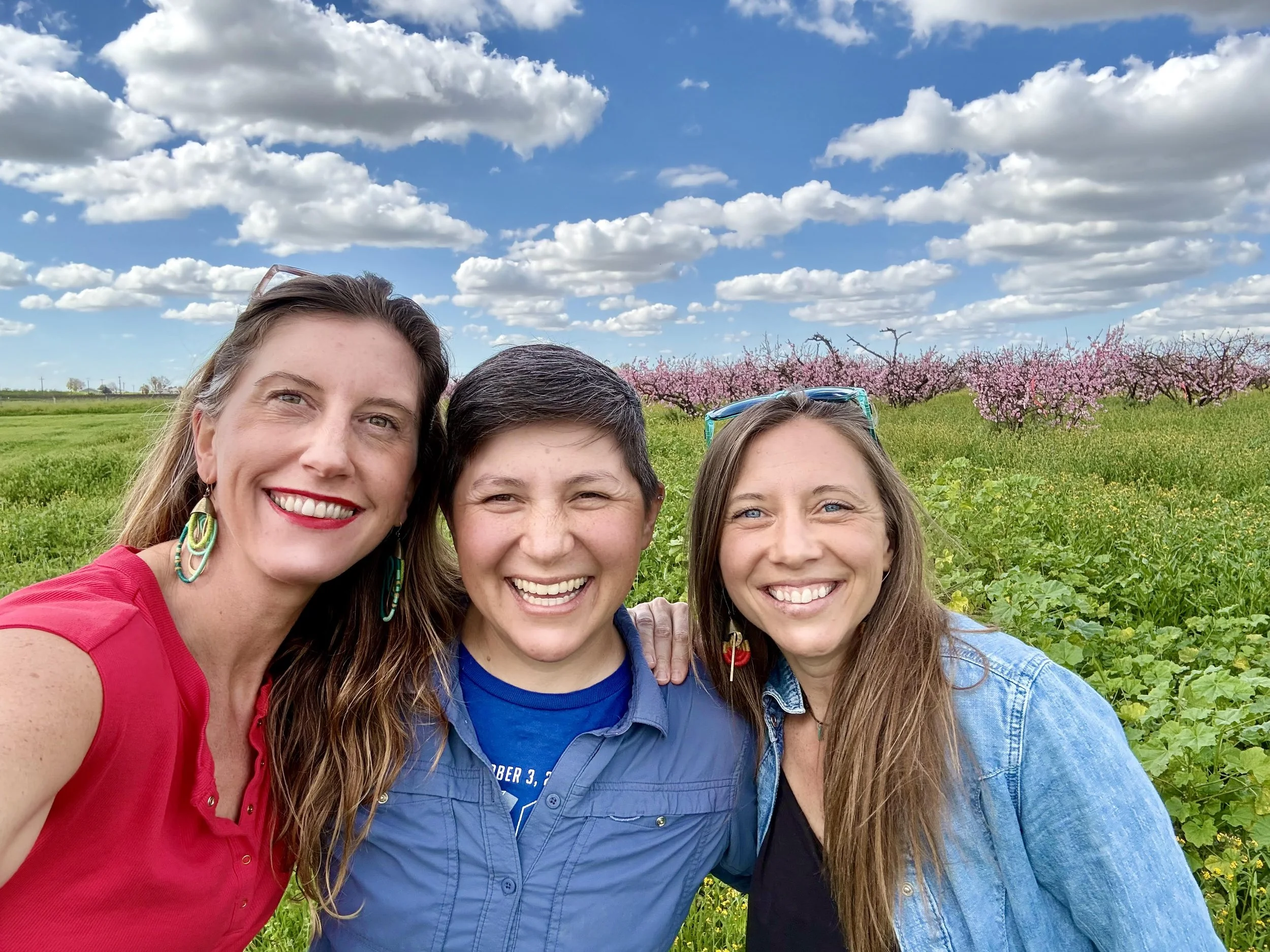
The following day we drove deeper into California’s agricultural heartland, eventually arriving at Masumoto Family Farm just outside of the town of Fowler.
Our friend and colleague, Nikiko Masumoto, greeted us with the warm hospitality that defines so many rural homes. Her family’s farm, now in its fourth generation, grows organic peaches and nectarines and sits at the intersection of agriculture, art, and storytelling.
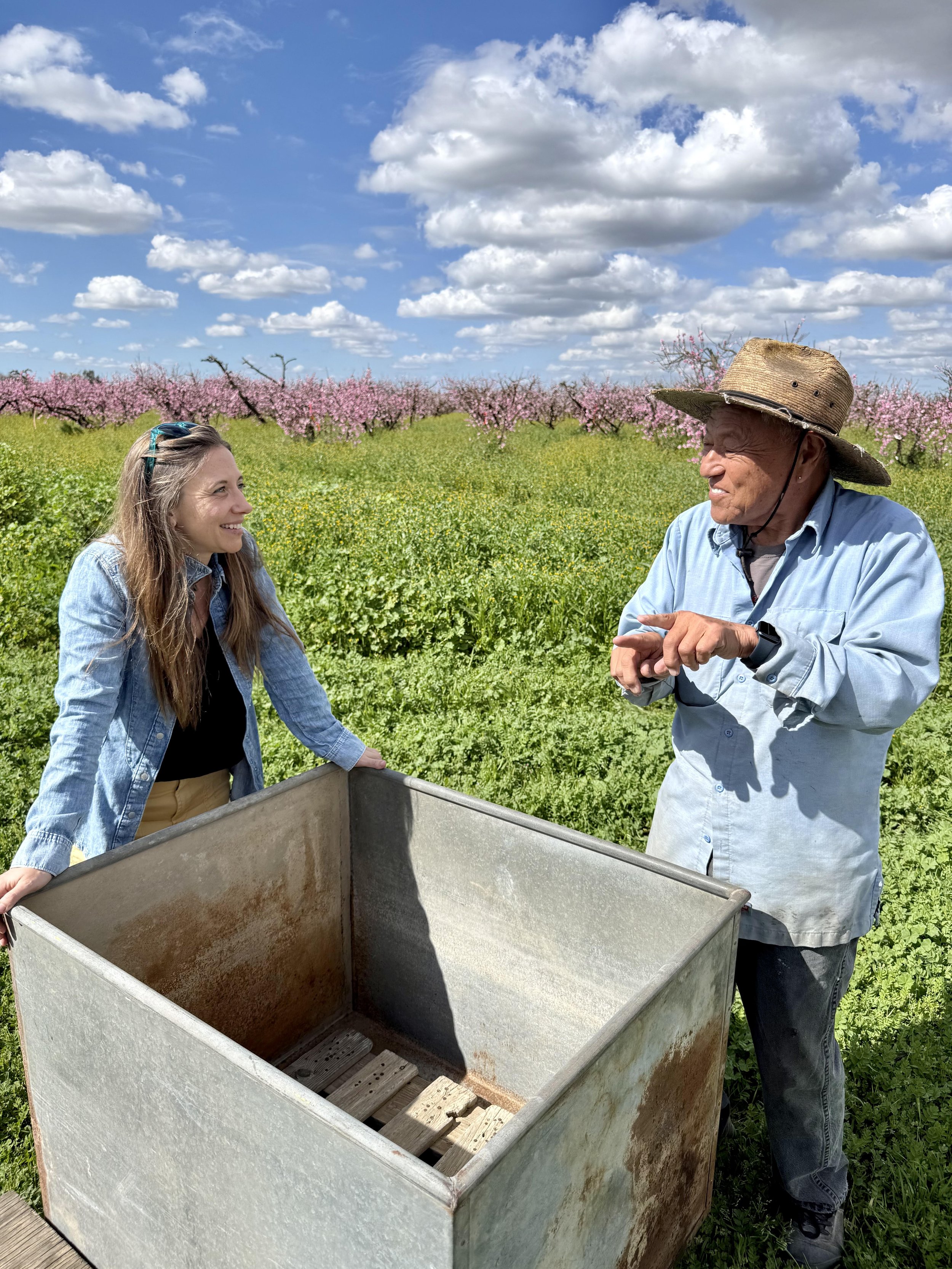
This was where we planned to record our podcast conversation. Except rural broadband had other plans. The internet signal at the farm was not strong enough for all three of us to access at one time. The episode we had traveled across the state to record simply wasn’t going to happen. And yet, in hindsight, that technical failure became one of the greatest gifts of the trip. Freed from the pressure of recording, we spent two full days simply being there: walking the orchards, sharing meals, giggling with Nikiko’s family, and listening. It made us think that the better communication platform Nikiko’s farm had to offer was the old phone booth in the field that her family had installed for visitors to leave messages to their ancestors who have come and gone… a much more fitting form of communication for the land we were visiting.
This also gave us time with Nikiko’s father, writer and farmer David Mas Masumoto, whose stories stretched across generations of Japanese American experience and from farming the land to surviving the incarceration camps of World War II to rebuilding family life afterward and whose organic farming practices are known and revered across the country.
Nikiko describes herself as a memory keeper. It is a role she carries both privately within her family and publicly through her work as an artist and storyteller. Her perspective resonates deeply with the theme guiding this year’s Beyond the Clock season: exploring the relationship between memory keepers and rural futurists.
Who are the people who carry history forward? Who are the people imagining what comes next?
Often, they are the same individuals. They are the rural artists who move between past and future, retrieving stories that help guide the communities they care about toward something new. People who traverse worlds.
During our visit, Nikiko spoke about her work creating what she calls the “School of Memory Keeping,” a practice that invites people into small, structured moments of reflection, sometimes only ten minutes long, where stories can surface safely and collectively.
Memory, she reminded us, does not only live when written down. It lives in our bodies, in our families, and in our landscapes. And, tending to those memories is essential if we hope to build futures rooted in honesty rather than erasure.
The podcast episode we had planned would eventually be recorded later, once everyone returned home. But, we knew something important had shifted in our art of visiting. Because the conversation we would eventually record would now be infinitely richer, layered with the sensory experiences of the farm, the voices of Nikiko’s family, and the slow unfolding of stories that could only emerge through time spent together.
Sometimes the excuse for visiting is not the real reason you go. Sometimes the visit itself is the work.
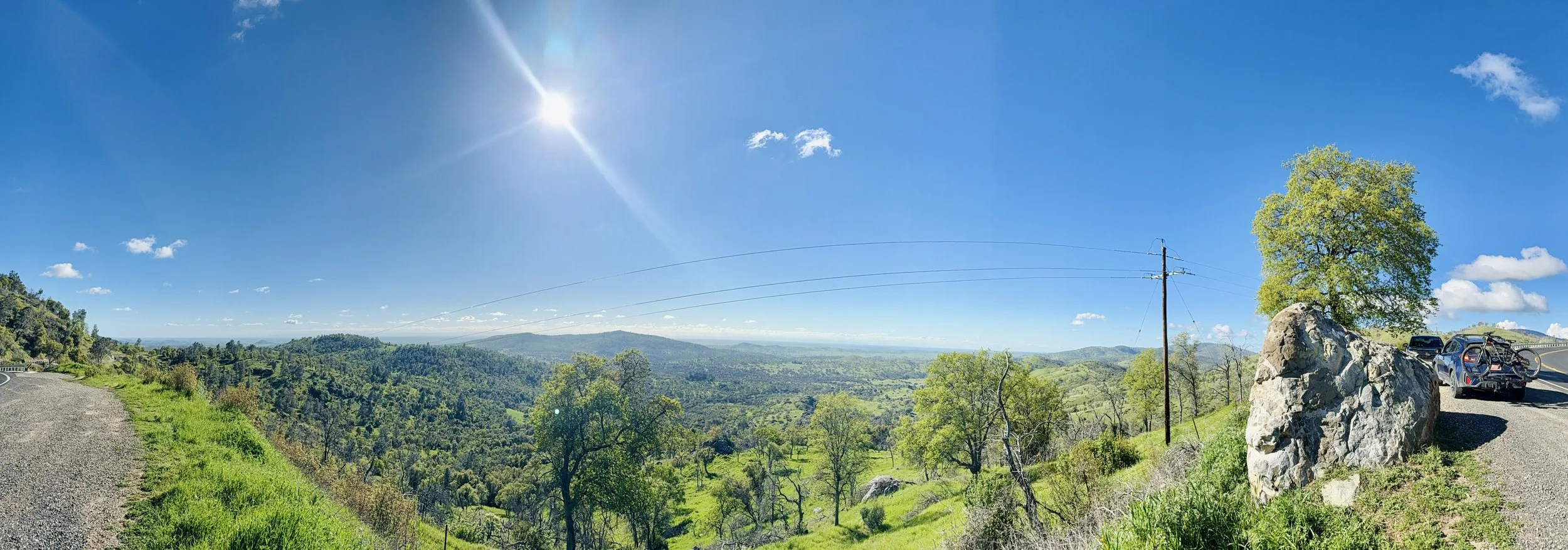
In rural communities, bridge-building is rarely a program. It’s simply how life works.
Mariposa
From the farm, we drove north toward the foothills of the Sierra Nevada and the town of Mariposa.
Ash had reached out to Cara from the Mariposa Arts Council, someone she had only known through email. “Nearby,” in rural geography, meant about ninety minutes away.
Cara invited a few friends to join us: her brother Ben, a city planner, and Ben’s wife Bridget, who works with a regional conservation organization. We met at a place called The Hideout. A century-old underground bar covered wall-to-wall with signed dollar bills.
Outside, the day was bright and beautiful. Inside, we sat happily in the dark. And something remarkable happened. Around that small table, none of us had to explain what we meant when we talked about our work. Every person there was a rural cultural practitioner.
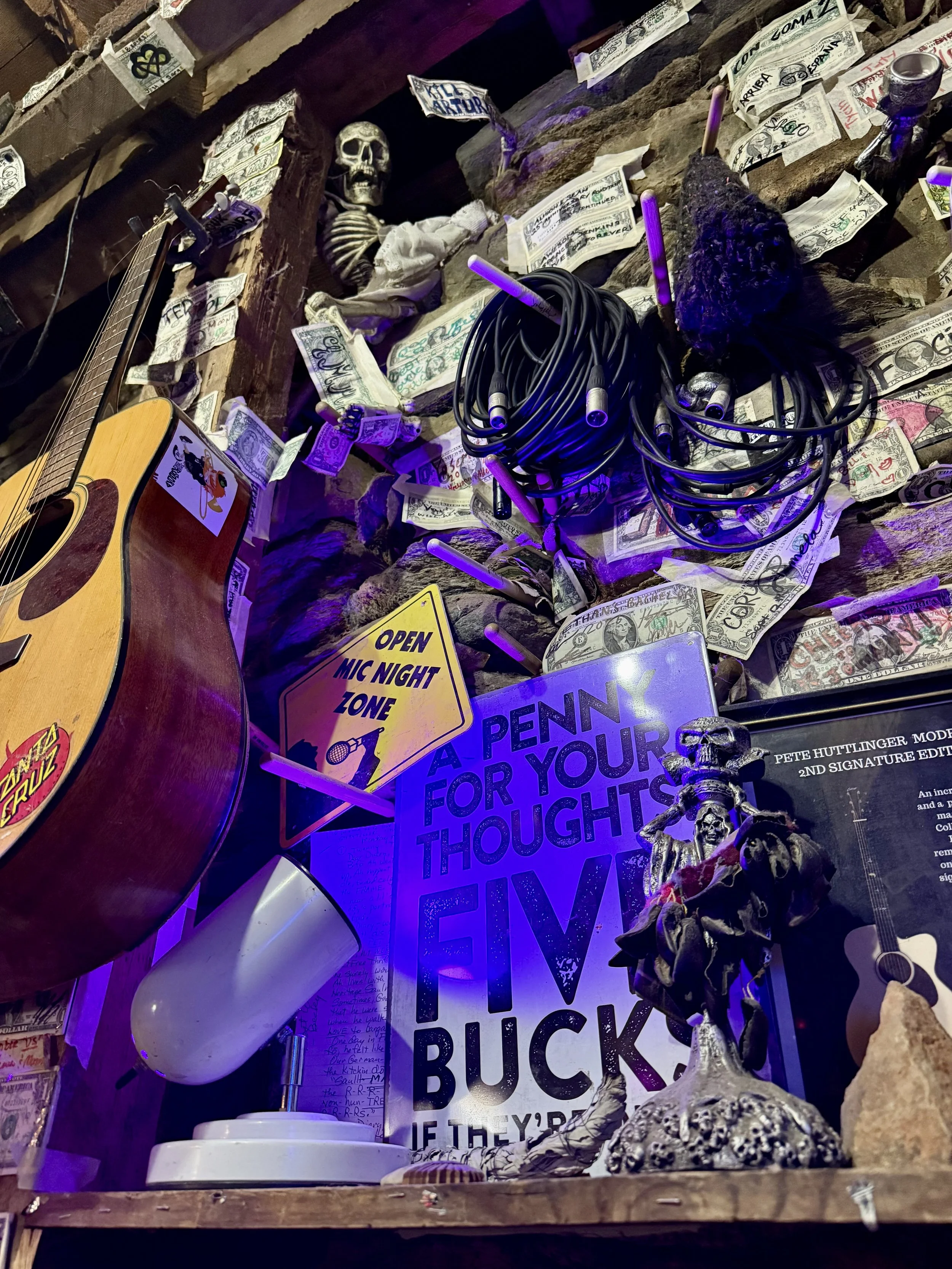
When Cara casually mentioned calling her high school prom date (now the local jail administrator) to collaborate on a poetry workshop with incarcerated residents, everyone immediately understood the delicate choreography involved in making that happen in a town of two thousand people.
There was no need to translate. No need to provide background context. Just recognition. Even in this dark back room of an underground bar… how our lights did shine!
The conversation moved fluidly across topics: art, conservation, ranching, land stewardship, community conflict, and the complicated relationships that shape rural life. In larger urban settings, these conversations are often framed as ideological debates. In rural communities, they are simply everyday realities. You live among people who hold different perspectives. You disagree. You argue. And, because you all share the same place, you keep showing up.
In rural communities, bridge-building is rarely a formal program. It’s simply how life works.
And yet, the work of bridge-building doesn’t stop at the edges of rural communities. Many of us move between places, rural and urban, carrying relationships we love across landscapes shaped by different lived experiences and different interpretations of the same events. On our drive, we discussed how in recent weeks, we were struck by how easily complex acts of care are flattened into a single narrative. Anna shared how, from a distance, what was happening in Minneapolis could be reduced to images of protest, capturing the loudest and most visible moments. But on the ground, the story was much quieter and more relational: neighbors delivering food through cautiously opened doors, volunteers watching bus stops, artists creating signs and songs that helped communities feel less alone, and small groups learning their rights and documenting what they witnessed. These were not spectacles; they were ordinary people stepping into responsibility for one another, true civic intimacy. She found herself reaching out to friends and family far from the city, inviting them not to look away, but to stay connected, to trust the voices of people they know, and to remain in-relationship even across distance and difference.
In many ways, it felt like another version of what we experienced in that dark bar in Mariposa: a reminder that bridge-building is not always about agreement, but about recognition. About letting the light in — not by resolving our differences, but by refusing to lose each other in the noise, and continuing to show up, again and again, across whatever landscapes we inhabit.
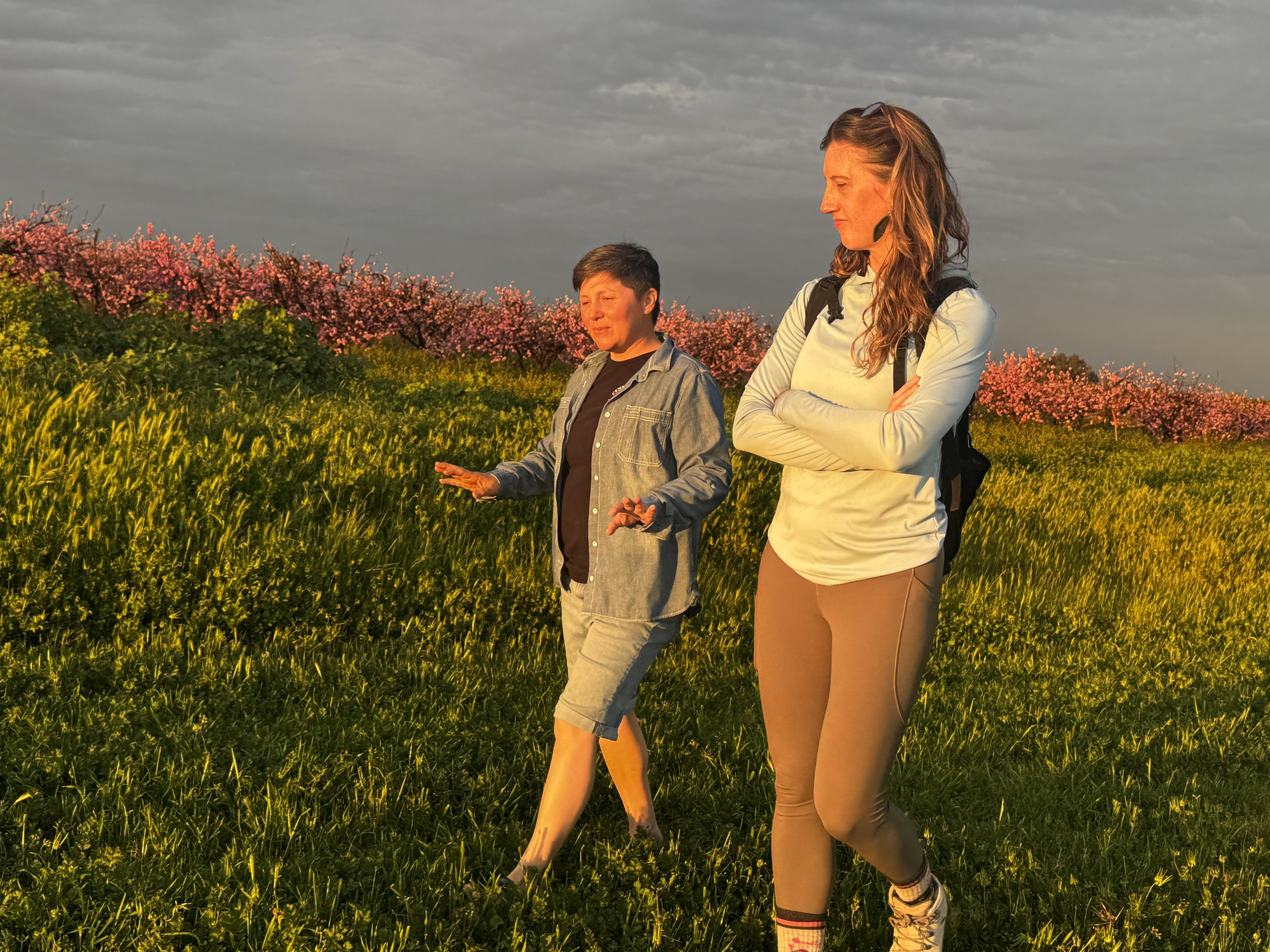
Sometimes simply being there is enough.
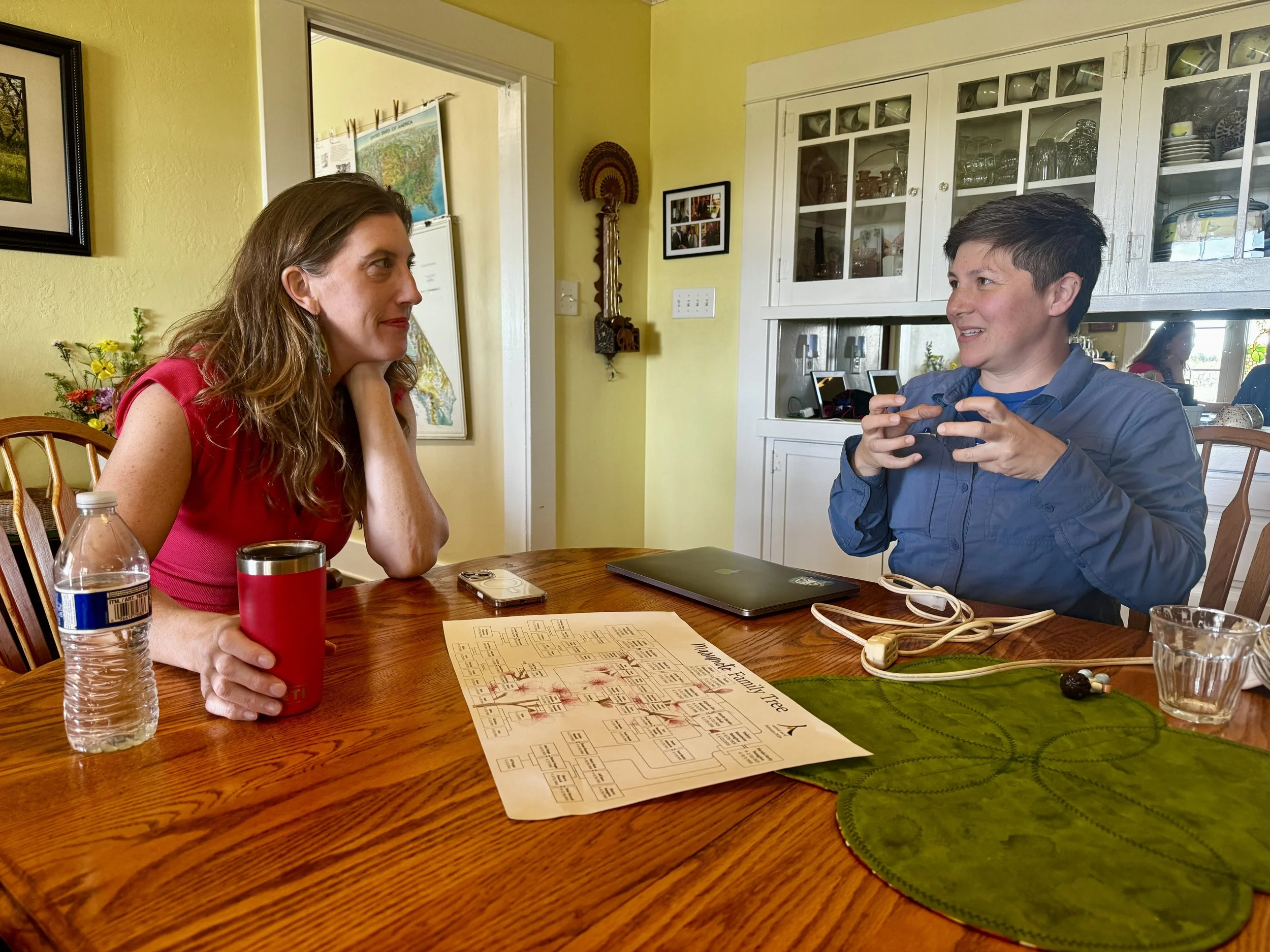
Learning the Rural Language
At one point during the trip, Nikiko offered a reflection that stayed with us.
“Rural communities are often expected to become fluent in the language of urban systems,” she was referring to grant writing, institutional frameworks, and policy structures, “but, how often are urban institutions expected to learn the language of rural places?”
The language of distance. The language of neighborliness. The language of working alongside people you may disagree with but still rely on.
One way to begin learning that language is through the art of visiting. Not the rushed kind of visit where someone flies in for a meeting and leaves before dinner. The kind that requires traveling a little farther than is convenient. The kind that asks you to slow down long enough to understand how a place actually works.
In reflection, the art of visiting — something we both attribute to our rural roots — shares bedrock principles with the civic intimacy expressed in Minneapolis early in 2026. Both begin with curiosity and ask us to move closer rather than retreat into abstraction. Visiting requires time, presence, and a willingness to understand the rhythms of someone else’s lived reality; civic intimacy asks us to extend that same attention to one another’s safety and dignity. These were not dramatic gestures, but relational ones, the kind that grow when we allow proximity to soften distance.
The art of visiting teaches us that understanding is built slowly, through conversation and shared experience; civic intimacy asks us to carry that understanding into action, to risk vulnerability, and to recognize that our lives are bound together. Both are practices of showing up, of letting the light in by choosing connection, even when it requires traveling the longer road toward one another.
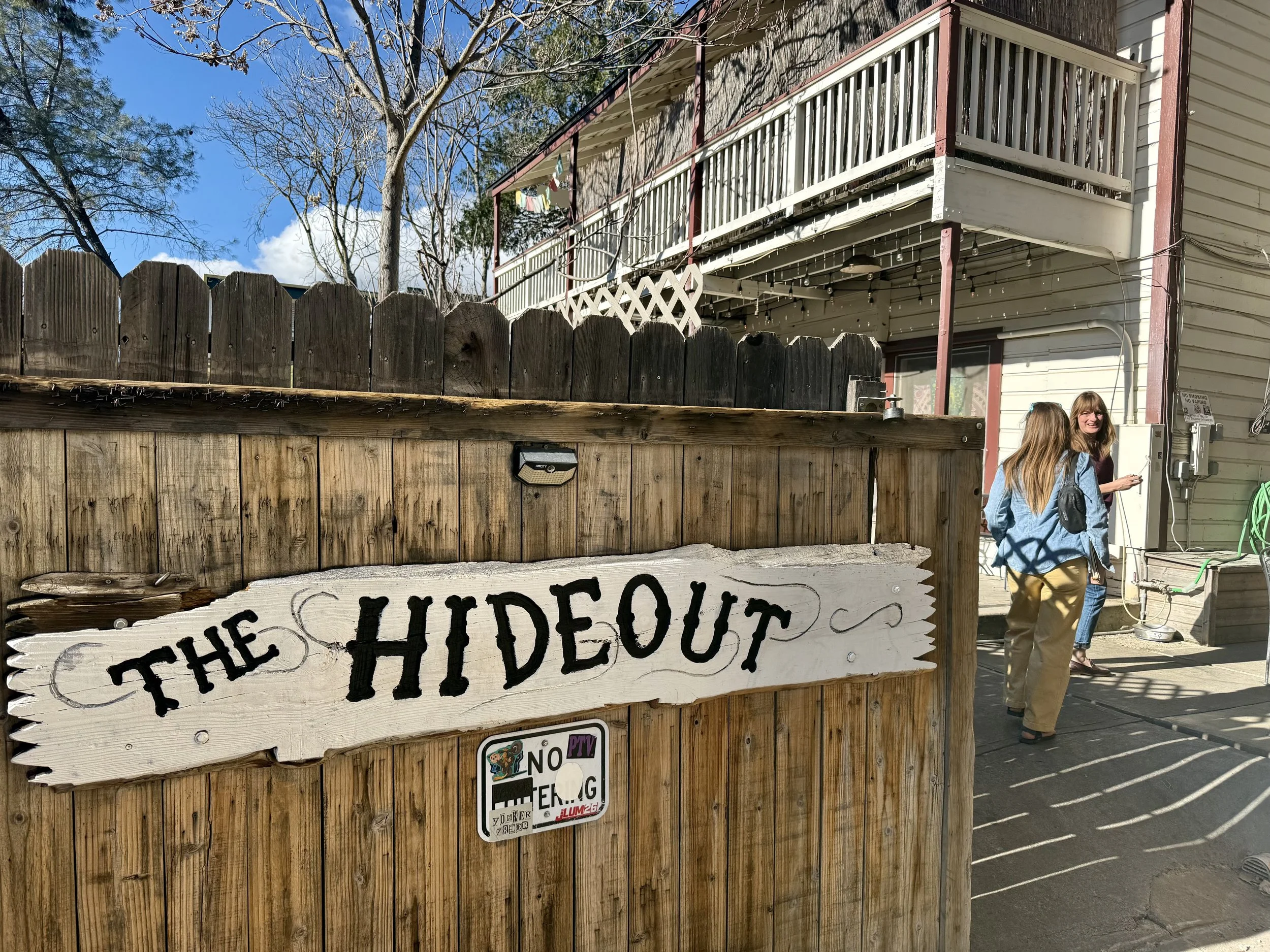
Sometimes you walk through a door and discover not strangers, but friends you simply hadn’t met yet.
Doors
As the afternoon faded into evening at The Hideout, a thin line of sunlight slipped through the crack in the door.
Anna noticed it first.
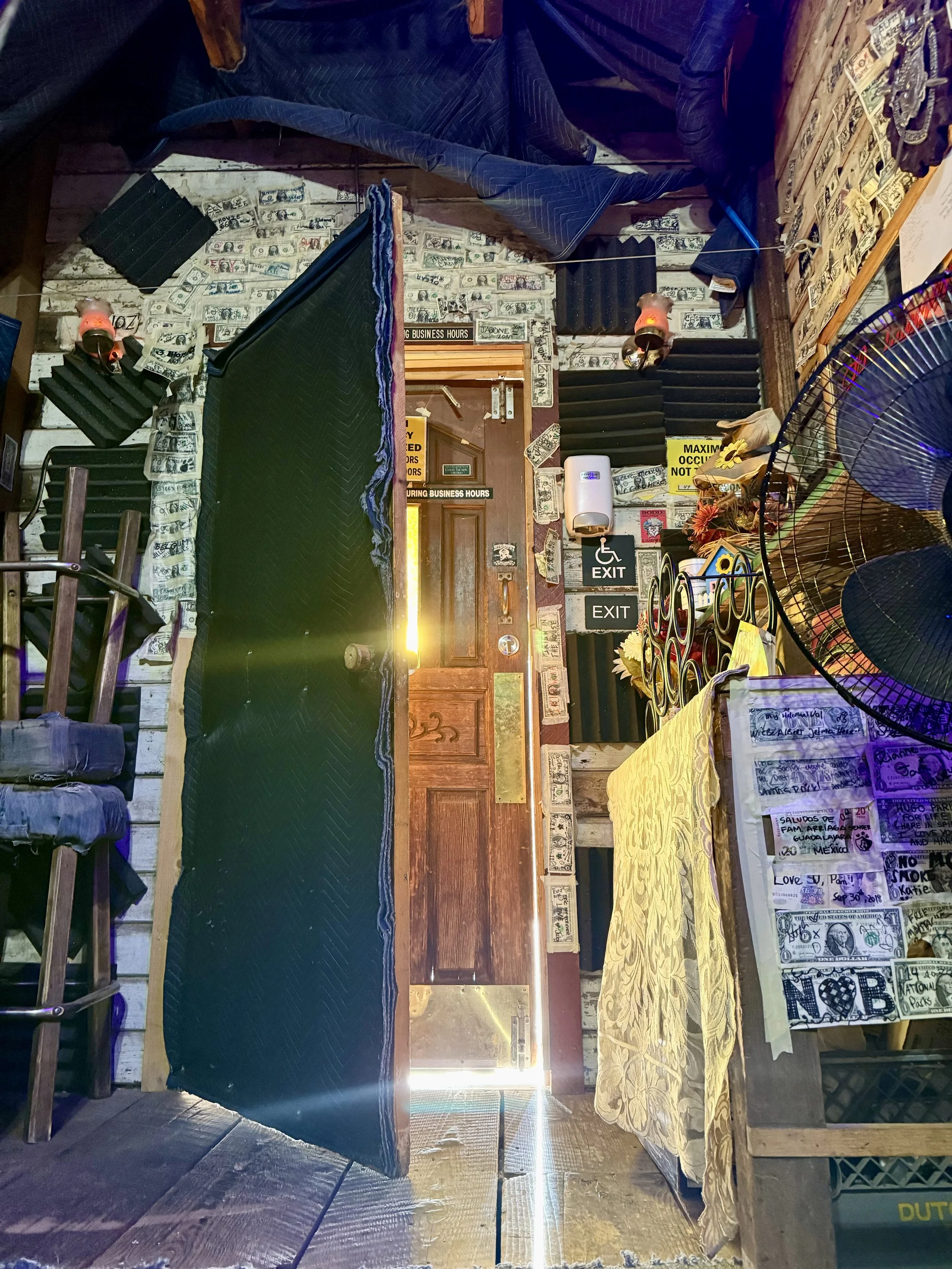
Doors are thresholds. Spaces between the past and the future; where we have come from, and where are going.
So much of our work as cultural practitioners revolves around figuring out how to invite people into rooms and how to create spaces where different perspectives can meet. But, sometimes you walk through a door and discover something unexpected.
Not strangers. Friends you simply hadn’t met yet. People doing the same quiet, behind-the-scenes work of building community in their own towns.
Artists. Storytellers. World-Traversers. Those who understand that creativity and care are essential tools for navigating the complexities of rural life.
Once you cross the threshold, the miles suddenly make sense. Because the purpose of the journey was never just the podcast we hoped to record. It was the people and places we visited along the way.
It is the showing up for one another, across distance and difference, that lets the light in.
BEYOND THE CLOCK is a monthly online gathering that fosters fellowship, shared learning, and community care for rural connectors and cultural workers.
Co-hosted by the Department of Public Transformation and Voices for Rural Resilience, with support from the Rural Assembly, Beyond the Clock invites creative rural rockstars from across the country to share in digital happy hours and learning exchanges that connect and inspire. Join us to grapple with the tensions and celebrate the joys of working in and with rural communities.